
 |
NO. 17 · 9‑MINUTE READ Tuesday, November 24, 2026 |
| Operator Notes is for the people running Indiana companies. Every other Tuesday, the handful of things worth your time on money, people, costs and deadlines. |
Good morning OWN network,
If your 401(k) has no Roth option, your highest-paid people 50 and older may get no catch-up in 2027.
THE 30-SECOND READ
1. No Roth option means anyone 50 or older over $155,000 in 2026 Social Security wages from you gets no 2027 catch-up. IRS notice (PDF)
2. If you e-file your own 1099s, they move to IRIS on Fri Jan 1; a FIRE code won’t work. IRIS application
3. The Labor Department’s contractor test changes Fri Jan 22 2027. Check each 1099 worker on control and the chance to make or lose money. The rule
4. An AI draft can read better and be wrong. Time one workflow for 30 days. The study (PDF)
NEXT OWN NIGHT
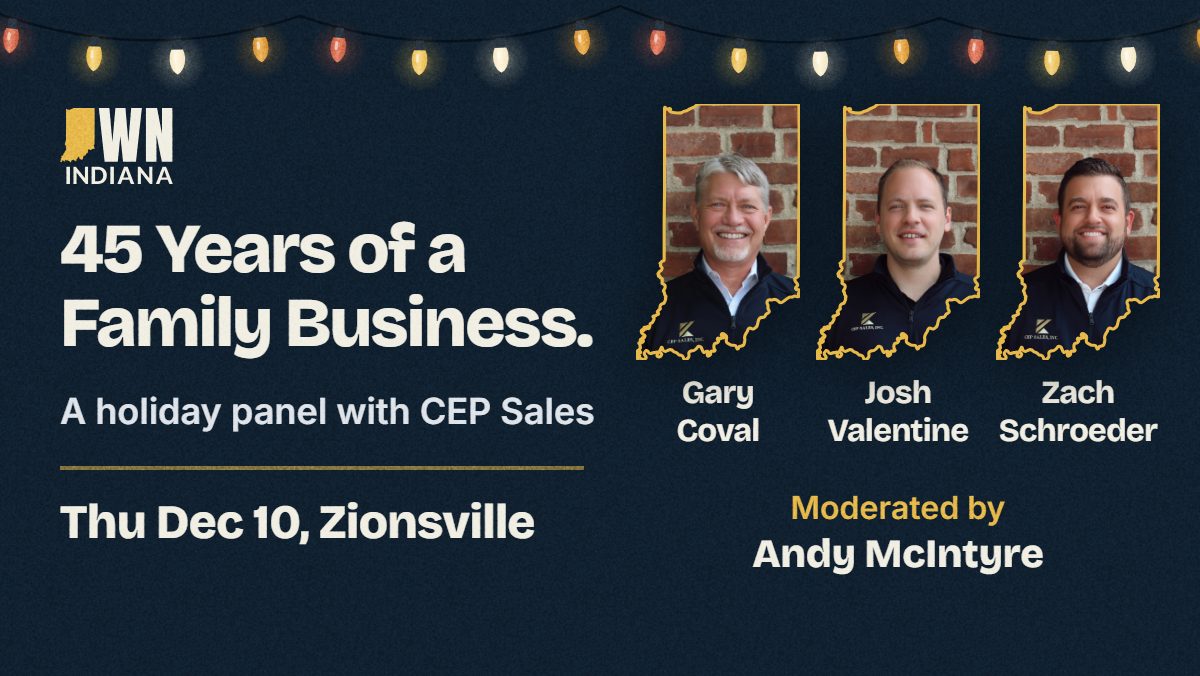 |
A holiday panel with CEP Sales on 45 years of a family business. At 5:30 Gary Coval talks with Josh Valentine and Zach Schroeder, two of the five who are buying the company, and Andy McIntyre moderates. Ask why every hire, family included, had to work somewhere else first, and why they sit down with the spouse before they hire.
Thu Dec 10, 4:30 to 7:30 PM, Zionsville American Legion, Post 79, 9950 E 600 S. $15 plus fees; members free.
THE LEAD
Three 401(k) checks before the first 2027 payroll
The IRS raised the limits for 401(k), 403(b) and governmental 457 plans to $25,500 for 2027. At 50 and over, catch-ups can reach $8,500 in most plans, or $11,750 for those turning 60 to 63 in 2027. IRS release
Since Jan 1 2026, an employee whose prior-year wages from the company topped a set line can make catch-ups only as Roth (after tax). For 2027 the line is $155,000 of 2026 Social Security wages. SEPs and SIMPLE IRAs aren’t covered.

A plan with no Roth option doesn’t have to add one. If it doesn’t, the final rules, in effect Fri Jan 1 (later for union-negotiated and government plans), set a $0 catch-up maximum for anyone over the line.
The rule counts Social Security wages from your company by the date paid. A bonus paid in December 2026 counts. One paid in January 2027 counts toward the 2028 line. Owners paid only as partners or sole proprietors have no Social Security wages from the company, so the line doesn’t reach them.
Start with your own Social Security wages. Before the first 2027 payroll, get three answers in writing from your plan administrator and payroll provider: who is over the line, whether the plan allows Roth, and how payroll will code catch-ups. Without Roth, decide now whether to add it.
THE INDIANA NUMBER

In a Census survey of employer businesses, an estimated 22.0% of Indiana businesses that operate only in Indiana said they had used AI in the prior two weeks, Oct 19 to Nov 1. Another 14.5% said they didn’t know.
OWN’s take: we’d act on the don’t-know answer first. If you couldn’t answer for your own company, find out where your people use AI and who checks the output before buying another tool. The survey doesn’t say why anyone answered “don’t know.”
Source: Census Business Trends and Outlook Survey, asked Nov 2 to 15 2026. Survey estimates. State file (xlsx)
MONEY ON THE TABLE
E-filed 1099s move to IRIS, and the automatic penalty relief doesn’t list them
Update from Nov 10: from Fri Jan 1, 1099s you e-file yourself go through IRIS, corrections included. W-2s go to the SSA. For most Form 1099-NEC payments, you file once the person’s 2026 total reaches $2,000 ($2,100 for 2027 payments), or at any amount with backup withholding.
The IRS’s automatic penalty relief, for businesses with three clean years, lists payroll returns like Forms 940 and 941. It doesn’t list W-2s or 1099s. A late W-2 or 1099 costs $60 if filed within 30 days, $130 by Aug 1 and $340 if later or not filed; employee or payee copies are penalized separately.
Ask your payroll provider whether it files your 1099s in IRIS. If you file yourself, apply for an IRIS code. Sources: 1099-NEC instructions, penalty table.
Child care tax credit now covers 500-worker employers
Indiana employers with 500 or fewer workers can claim a state tax credit for 50% of qualifying 2026 child care costs, up to $100,000, including contracts with licensed Indiana providers. Statewide credits cap at $2.5 million a year, in filing order; the law expires July 1, 2027. DOR’s bulletin (PDF)
EXPLAINED
The new federal contractor test doesn’t decide IRS or Indiana status
The Labor Department published a final rule on Mon Nov 23 that takes effect Fri Jan 22 2027. It replaces the 2024 test for federal minimum wage and overtime law and applies the same test to family leave (FMLA) and farmworker (MSPA) law.
Two factors carry the most weight: who controls the work, and whether the worker can make or lose money. When both point the same way, that’s likely the answer. Other circumstances still matter. What happens in practice counts more than the contract. DOL calls the test clearer than 2024’s and says it could mean comparatively more contractors, though neither more nor less permissive than its current enforcement.
The IRS uses its own test, and this rule doesn’t change it or Indiana’s unemployment and workers’ comp tests, so it’s no reason to move anyone to a 1099. In December, check each 1099 contractor against the two factors. Take any that don’t fit to an employment attorney before Fri Jan 22, and ask about the IRS and Indiana tests for the ones that do.
FROM THE LAST OWN NIGHT

At OWN Indiana’s first Bloomington night, Thu Oct 29 at BRU Burger Bar, Bill Black shared three lessons from his years in IT.
Get it in writing from whoever decides. Bill left a corporate IT job when his contact at a longtime client offered him a monthly contract. On his first Monday the contact was gone, and that person had never had the final say.
Price so you win when your customer does. Like a lot of IT companies then, his got paid when clients’ computers broke, so he moved them to a flat monthly price. A breakdown then cost him, and revenue became predictable.
Read your service history before a customer leaves. After a client lost a longtime customer, Bill went back through that account’s tickets and saw when they began to linger. Then every customer got the same check, and the client’s owner used it to shore up those relationships.
Students from Indiana University’s Entrepreneurship Through Acquisition (ETA) club and Philip T. Powell, who leads IU’s Indiana Business Research Center, joined the night.
THE PLAYBOOK
AI can speed up the draft and not the job
In a 2023 Harvard Business School and BCG experiment with 758 consultants, one task was built so GPT-4 would miss it. About 85% got it right without AI and 60% to 70% with it, 19 percentage points lower. The AI users’ recommendations were graded higher quality whether or not they were right. Working paper (PDF)
METR’s study found experienced developers took 19% longer with early-2025 AI tools and afterward believed they were 20% faster. Support agents with an AI assistant resolved 15% more issues an hour on average (Quarterly Journal of Economics, 2025). Different jobs, earlier tools.
Among Indiana manufacturers and logistics companies that took Conexus’s AI assessment, those under 150 Indiana employees piloted AI more often (41% vs. 28%) but ran it in production less than half as often (21% vs. 48%), self-reported.
OWN’s take: a reviewer who grades polish can pass the errors, because wrong AI work can read better. Judge a tool on net hands-on minutes to an output your most experienced person accepts. The test below is ours, untried in a small company.
Pick one recurring workflow. Keep a person on any step where a mistake costs money or a customer’s trust; on a quote, that’s the price. Time ten instances done today’s way, then write the pass line: which errors are zero tolerance and the net time AI must beat.
Run this test.
For 30 days, log every AI instance: minutes to set up and prompt, waiting, review, fixing and entry; whether the reviewer passed it; any critical error. On day 30, compare hands-on minutes and start-to-finish time with doing it by hand, then add the tool’s monthly cost: keep, retune or stop.

In the illustration, the AI draft arrives in 10 minutes (5 to set up and prompt, 5 waiting), but reviewing (12), fixing (15) and entering it (8) take 35 more: 45 minutes start to finish, the same as by hand. If someone uses the wait for other work, hands-on time drops to 40 minutes, and the tool’s cost can erase those 5.
FOR BUYERS AND SELLERS
ETA Indy 2027 returns to Butler University in Indianapolis on Tue Mar 9

Use code ETA2027EARLY for 25% off through Tue Dec 15. The conference on buying and selling established businesses has two tracks: deal mechanics (sourcing, financing, diligence, closing) and paths to ownership. Butler’s conference page
A sale can separate the cash, a stake and the top job
Fort Wayne’s Summit Brands, the Harter family’s for more than 65 years, was acquired by investment firm PPC (announced Mon Nov 16). The CEO, Joel Harter, and members of management kept ownership stakes, and he moves to the board. Terms weren’t disclosed. Before a buyer asks, decide which of those you want after closing.
Last call for veterans buying an Indiana business
Applications for Pass the Guidon, VentureVets’ acquisition cohort for Indiana veterans and military spouses, close Mon Nov 30; it’s free to those selected. The application
AI AT WORK, THU FEB 18

AI at Work: Where Business Owners Start is Thu Feb 18, 4:30 to 7:30 PM, Indy metro area, location to be announced; members get one free ticket. Add to calendar
Owner-Operator membership is $50 a year through Thu Dec 31 and $100 from Fri Jan 1, with free entry to every OWN night, the online community and directory, the mentor program and introductions on request. Operator Notes stays free for everyone, member or not. Join OWN Indiana
DEADLINE WATCH
Fri Jan 1 2027. Indiana’s individual income tax rate falls to 2.90%. County tax follows where each employee lives on Jan 1 (for out-of-state residents, their main Indiana work county); ask anyone who moved counties for a new WH-4
Fri Jan 15. Fourth-quarter individual estimated taxes, federal and Indiana. Storm relief moves both to Mon Feb 1 in Marion, Hamilton, Lake and other counties. The federal and state lists differ slightly, so check yours on DOR’s list and the IRS list
Mon Feb 1. Indiana’s fourth-quarter wage report, with its new required fields. DWD lists Sun Jan 31; its rule moves the report’s Sunday due date to the next business day, Mon Feb 1. File and pay by Fri Jan 29
Mon Feb 1. W-2s, 1099-NEC, Forms 941 and 940, and Indiana’s WH-3 (PDF). Storm relief doesn’t move W-2s or 1099s
Mon Feb 1. Post the 2026 OSHA 300A summary through Fri Apr 30 if you keep OSHA injury records (more than 10 employees at any time last year, company-wide, outside exempt industries)
Tue Mar 2. E-file the 300A for sites with 20 to 249 in an industry on OSHA’s list (construction and manufacturing are on it), or 250 or more that keep the records; sites with 100 or more on OSHA’s Appendix B list also e-file the 300 log and 301 reports
AROUND INDIANA
Thu Jan 21. FMLA Seminar, Indiana Chamber, Indianapolis or online. A day on leave rules with Ogletree Deakins
Mon Feb 8 to Wed Feb 10. Indiana Safety and Health Conference & Expo, Indiana Chamber, Indianapolis. More than 70 breakouts on compliance and safety
Fri Feb 12. Stephen Moret of Strada Education Foundation, an Economic Club of Indiana luncheon, Indianapolis
Tue Feb 23 to Wed Feb 24. Indiana Work-Based Learning Conference, Indiana Chamber, Indianapolis
OWN QUARTERLY

OWN Quarterly pulls together, every three months, what changed for Indiana businesses and what to check next. The Q3 2026 edition, Review & Outlook, covers July through September in 12 slides: costs, customers, people, buyers and sellers, and looking ahead to 2027. Read the Q3 edition.
Reach out if you have ideas for OWN in 2027.
Happy Thanksgiving!
 | Jared Luegers Founder, OWN Indiana |
P.S. Complete your reader profile: it tells us which nights and intros fit your business.